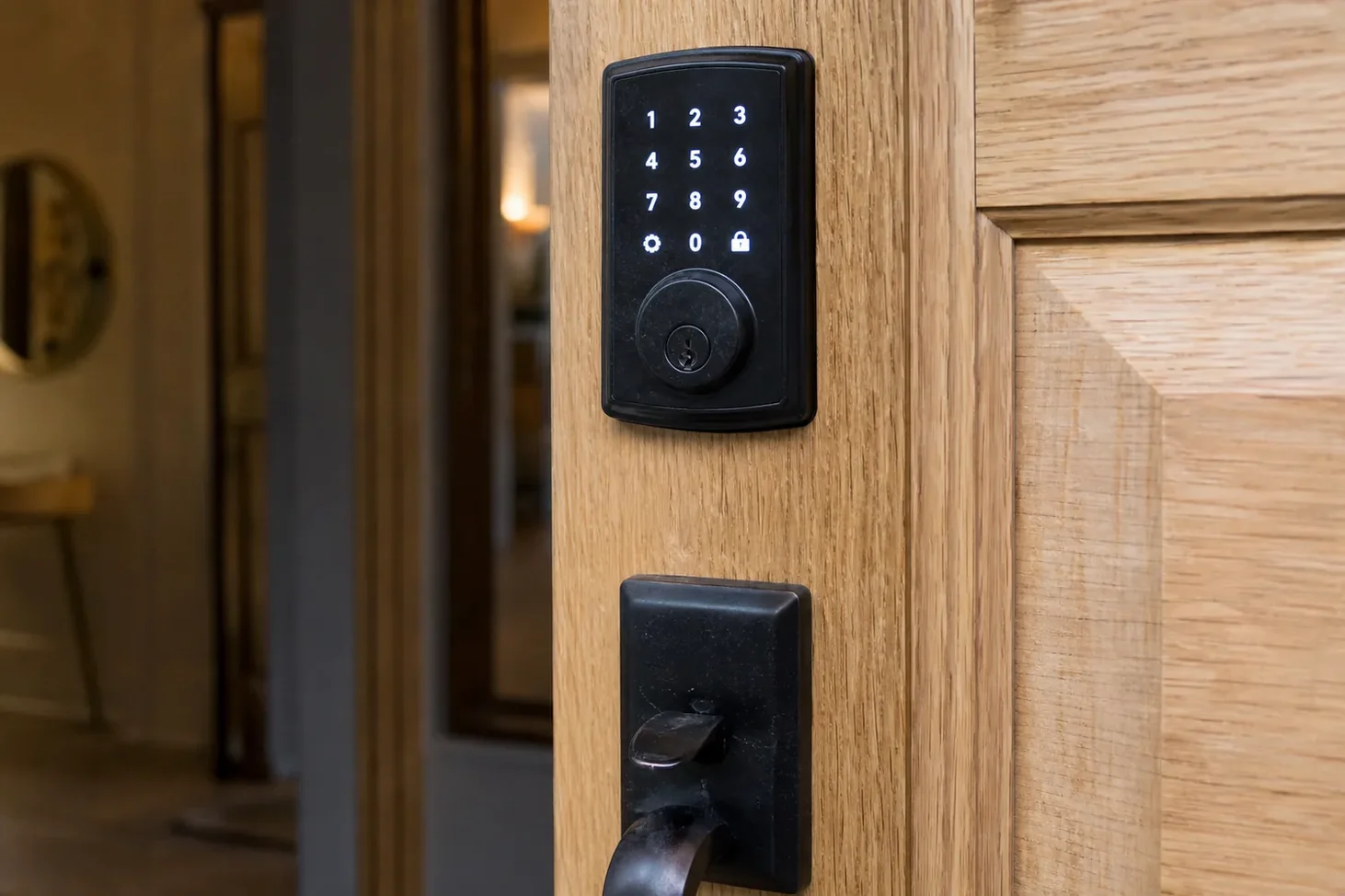
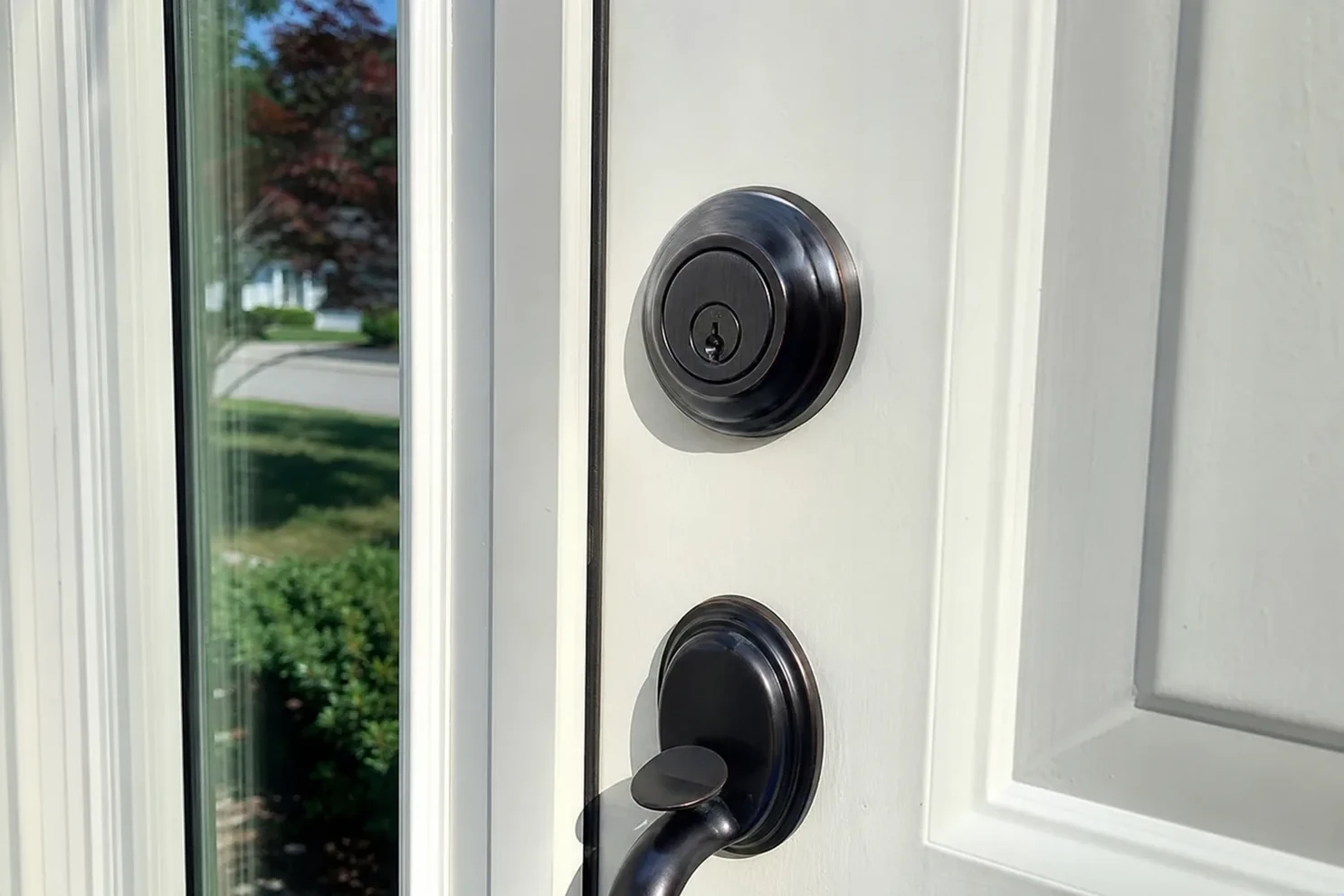
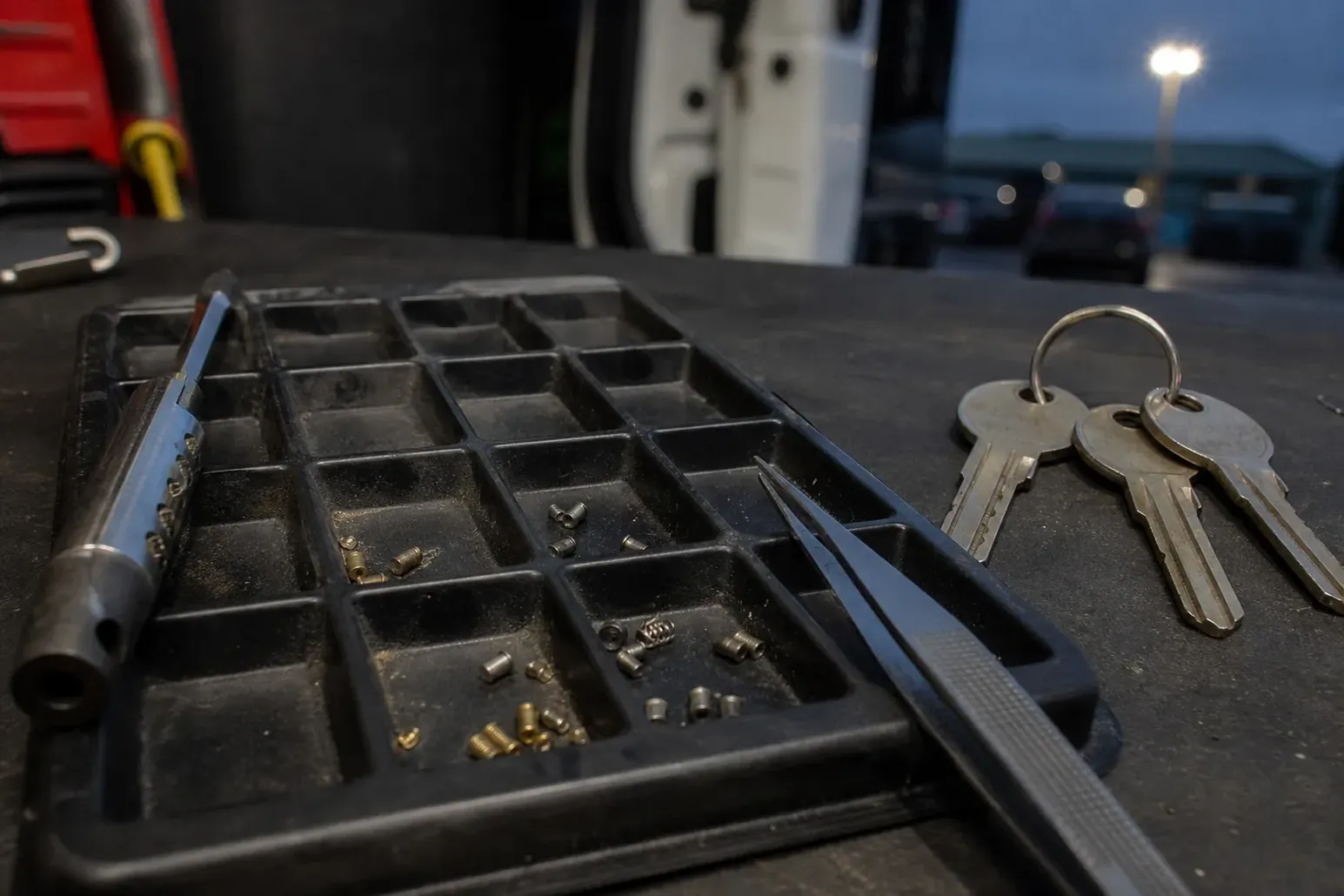
Here's how it runs. For a full rundown of keypad and app locks, see smart lock installation. Extra keys for family, tenants or a neighbor are cut on site too; see key duplication.
Every door that takes a key, plus gates and sheds if you want them.
Closing documents, a deed, or a license showing this address; tenants bring the landlord's OK.
Sound locks rekeyed; worn ones replaced.
New keys handed over.
Historic homes near the lakes often have original hardware worth keeping; it's rekeyed where it can be.
With several colleges in town, a lot of houses and apartments are rented, and keys change hands every year. Landlords who rekey between tenants never have to wonder who still has a key.
Keypad locks help too: a code per tenant, changed on move-out day.
After a break-in, call the police first. After that, the doors: a frame that split, a lock that was damaged, keys that might have been taken. Doors are repaired so they close and lock again, and the locks rekeyed if any keys are missing.
It's also the moment to look at the doors that weren't touched: a sliding door with only its latch, a garage entry door with a light-duty lock, a side gate. Stronger strikes, sturdier deadbolts and secondary locks on sliders can go in on the same visit.
What to have ready: ID with the address, and the police report number if there is one. You're left with doors that lock, locks nobody else has a key to, and a clear picture of what was upgraded. Many people also add a keypad afterward, so there's no key to hide or to lose.
Keypad and smart deadbolts mount in the holes your door already has, and the codes are programmed together with you. The strike is adjusted so the bolt throws without force.
Codes for dog walkers, cleaners or a teenager can be added and removed without handing out keys. Keep one physical key in a safe place.
Yes; it's the only way to be sure old keys don't work. Doing it on move-out day, before the new tenant arrives, also gives both sides a clean record of who holds keys.
Not a problem: rekeying doesn't need them. It also means the old owners' keys, and every copy they handed out, stop working.
Yes. Original hardware is rekeyed or repaired where possible, and when a lock has to go, the new one is matched as closely as possible to the old doors and hardware.
Yes, installed and programmed with you. Choose one with a physical key backup, since heat and dead batteries are the usual reasons keypads fail.
Usually the door or the strike is out of line; it's adjusted, and the lock is replaced if it's worn.
Most of the time. Where a lock won't take the same key, it's swapped for one that will.
Yes. Most homes are finished in one visit; a house with many doors, or a mix of old and new locks, takes a little longer.
Yes, before any work, lock by lock, so you can decide what gets done now and what can wait.
Call the police first. Then the door and frame are repaired so the door locks again, and the lock replaced if it was damaged. Tell us what happened when you call.
Yes, with a secondary lock or a bar, and a check of the latch so the slider closes fully.
Rekey the locks. There's no telling who left it or how many copies exist.
Yes, a privacy lock or a keyed lock, depending on what the room is for.
Call us and we get a tech out to you.